Sanctuaries · San Luis Potosí · Wixárika (Huichol) · ancient pilgrimage, walked today
Wirikuta
The most sacred land of the Wixárika people, endpoint of an ancient pilgrimage across the desert.
UNESCO World Heritage (2025) · Wixárika route
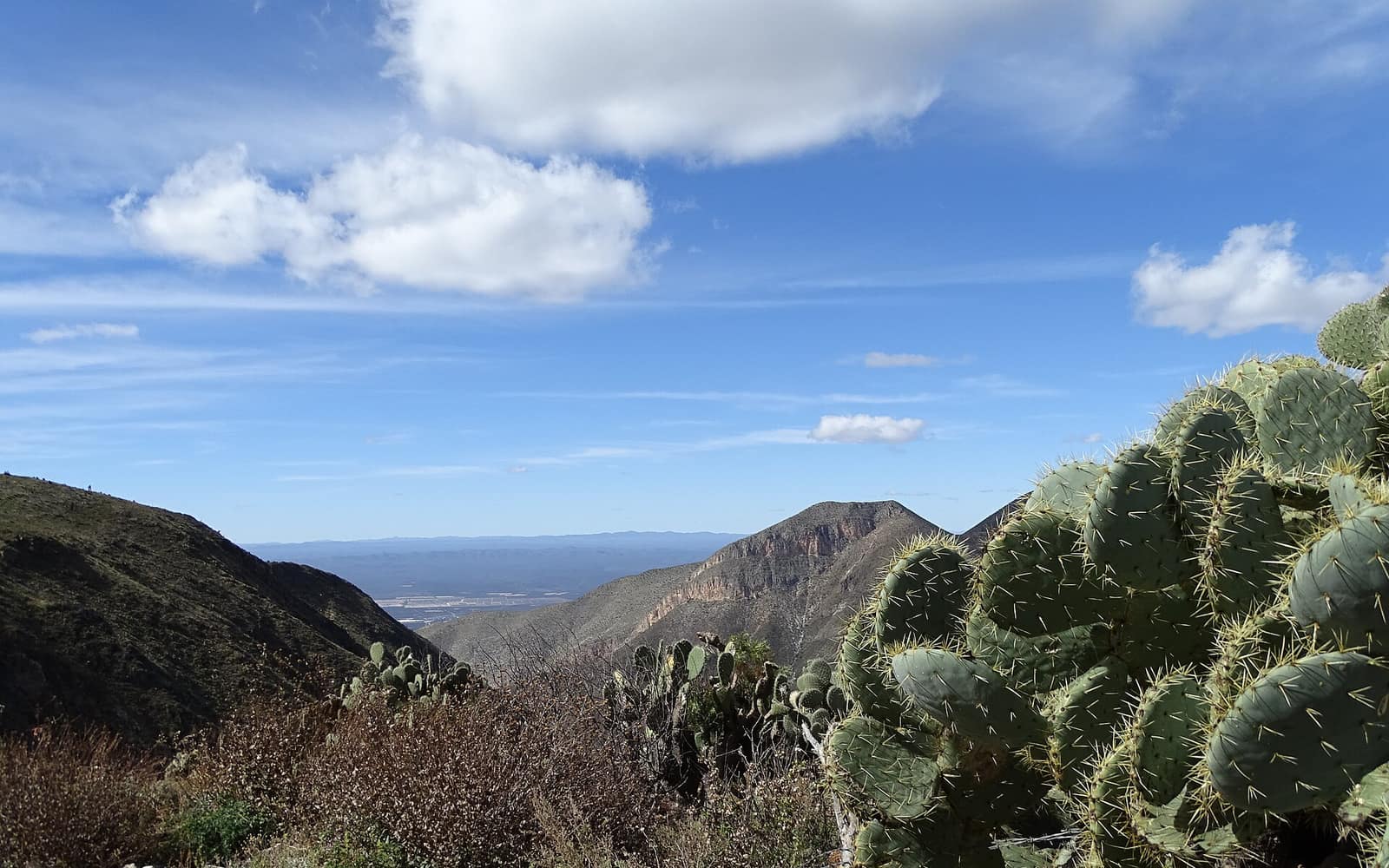
In the high desert of San Luis Potosí, past the old silver town of Real de Catorce, the ground rises toward a low peak the Wixárika call Reunar. For them this is Wirikuta, the place where the sun first broke over the world and the desert endpoint of a pilgrimage their families have walked for centuries. It is not a monument or a lookout but a living sacred land, still tended, still defended, and still largely not ours to wander.
The pilgrimage
Once a year, Wixárika families set out from their communities in the western Sierra and travel east toward the desert. Elders and singers called maraka'ames lead the way, retracing the path their deities and ancestors are said to have taken from the Pacific coast to the place where the world began. The journey runs more than 500 kilometers and crosses five states, from Nayarit and Jalisco through Zacatecas and Durango into San Luis Potosí.
Along the way the pilgrims stop at sacred springs, caves, and hills, leaving offerings and prayers at each. Because Wixárika knowledge has long been carried by voice rather than writing, the walk itself is how the culture is remembered and renewed. Wirikuta, in the high desert, is where the route ends and its purpose is fulfilled.
Where the sun was born
In Wixárika cosmology, Wirikuta is where the first dawn broke. The peak they call Reunar, marked on Mexican maps as Cerro Quemado, is where the sun is said to have risen for the first time, and it stands as one of the most important shrines in the whole territory.
The desert here belongs to Tatewari, Grandfather Fire, and to Tamatsi Kauyumari, the deer who guides the people. The Wixárika describe everything in Wirikuta as sacred: every spring, every hill, every plant and animal across some 140,000 hectares. Peyote, which they call hikuri, grows in this ground and is central to their ceremonies, which is one reason the community guards it so closely.
What UNESCO recognized
On 12 July 2025, meeting in Paris, the UNESCO World Heritage Committee inscribed the Wixárika Route through the Sacred Sites to Wirikuta. Its Wixárika name, Tatehuarí Huajuyé, means the path of our Grandfather Fire. The listing covers a serial property of twenty sites strung along the pilgrimage, and it is described as the first World Heritage recognition of a living Indigenous culture's route in Latin America.
The Wixárika welcomed the decision but were clear about its limits. A UNESCO title does not cancel a mining permit or stop a well from being drilled. Their leaders framed it instead as a tool, one more argument in a long effort to keep the land intact.
A land under pressure
Wirikuta sits over rich veins of silver, and much of the protected area is blanketed by mining concessions. After the Canadian company First Majestic Silver acquired rights near Real de Catorce, the Wixárika Regional Council won court injunctions in 2011 and 2012 that suspended the projects. More than a decade later the case is still unresolved, the concessions neither worked nor cancelled.
Mining is not the only threat. Industrial greenhouses and irrigated agriculture draw down scarce desert water, and peyote is being stripped from the ground by poachers and by outsiders chasing a psychedelic experience. The defense is led by the Wixárika themselves, through the Wirikuta Defense Front and allied communities. In September 2025, weeks after the UNESCO vote, residents took down an illegally erected fence so the desert and its pilgrims could move freely again.
Being near it, with respect
Wirikuta is a living sacred land, not a ruin or a viewpoint, and most of it is not open for visitors to explore. The town of Real de Catorce sits at its edge and can be visited, but the shrines, the offerings, and much of the desert belong to a community that is still using them.
Come, if you come, to witness and to learn, not to take. Do not treat Wirikuta as a place to find or consume peyote; the plant is sacred to the Wixárika and is already being destroyed by outside demand. Leave stones, plants, and offerings where they are, ask before photographing people, and put any support behind Wixárika-led protection rather than tours that sell the desert's medicine.
Did you know
- The route's official Wixárika name, Tatehuarí Huajuyé, means the path of our Grandfather Fire.
- Cerro Quemado, the peak the Wixárika call Reunar, is where they say the sun first rose over the world.
- Wirikuta lies within the greater Chihuahuan Desert, among the richest zones for cactus diversity on the continent.
- Because Wixárika culture has long been oral rather than written, the pilgrimage itself carries and renews the community's knowledge across generations.
- San Luis Potosí recognized Wirikuta as a protected natural area around 2000 and reclassified it as a Sacred Natural Site in 2001.
- The 2025 inscription is described as the first UNESCO World Heritage listing of a living Indigenous culture's route in Latin America.
- In September 2025, weeks after the UNESCO listing, ejido residents and Wixárika took down an illegal barbed-wire fence across the desert so that, in one participant's words, the deer, the rabbit, and the rattlesnake could pass again.
Through time
- c. pre-Hispanic Wixárika ancestors walk east to Wirikuta along old trails between the coast and the desert.
- 1994 San Luis Potosí names Wirikuta a site of cultural heritage and ecological conservation.
- 2000 to 2001 Declared a state protected natural area of about 140,000 hectares, then reclassified a Sacred Natural Site.
- 2008 The Hauxa Manaka pact is signed to protect Wixárika sacred sites; a management plan restricts mining.
- 2011 to 2012 Facing First Majestic Silver concessions, the Wixárika win injunctions that suspend mining in Wirikuta.
- 12 July 2025 The Wixárika Route through the Sacred Sites to Wirikuta is inscribed on the UNESCO World Heritage List.
- September 2025 Communities dismantle an illegally erected fence cutting across the sacred desert.
Before you go
Wirikuta is a desert landscape, not a gated site. Most people reach its edge through Real de Catorce, the old silver town above the Sierra de Catorce, entered from Matehuala in San Luis Potosí through a long single-lane tunnel. The desert floor below, around Estación Catorce and Wadley, is core sacred ground and is not a place to roam at will.
The Wixárika time their pilgrimage to their own ceremonial calendar, generally in the drier, cooler months between autumn and spring. This is their journey, not a tour to join. For a respectful visit to Real de Catorce, those same drier months are the most comfortable.
A day or two at the desert's edge, based in Real de Catorce, is enough to sense the place and its history. Wirikuta is not somewhere to settle in and search for peyote.
Treat Wirikuta as someone's living church, not an attraction. Much of the land is not for outsiders to wander, so keep to public areas and any Wixárika-guided ground. Do not come to find, buy, or consume peyote: it is sacred to the Wixárika and is being wiped out by poaching and psychedelic tourism. Take nothing, no plants, stones, or offerings, and disturb no shrine. Photograph people only with consent, and direct any support to Wixárika-led protection, such as the Wirikuta Defense Front, rather than operators selling desert experiences.
A living sacred site. Presence here asks for restraint, not a checklist.
Sources: UNESCO World Heritage Centre, Wixárika Route (ref. 1704) · UNESCO, The Wixárika Route joins the World Heritage list · Wixárika Research Center, What is Wirikuta · Wixárika Research Center, Route earns UNESCO status · Mongabay, Wixárika thirteen-year legal battle over mining · Mexico News Daily, On sacred Wirikuta, a fence comes down
Nearby & related
The most visited Catholic shrine in the Americas, on a hill that was sacred long before it.
Sanctuaries · Mexico City ChalmaA canyon shrine to a Black Christ that grew over an older cave cult, and Mexico's second most important pilgrimage site after Guadalupe.
Sanctuaries · State of México San Juan ChamulaA Tzotzil Maya town whose whitewashed church shelters a living religion practised on a floor of pine needles, by candlelight and copal smoke.
Sanctuaries · Chiapas IzamalA Maya holy city where a giant Franciscan convent sits on a flattened pyramid platform and Maya temples still rise between the streets.
Sanctuaries · Yucatán Cristo Rey (Cerro del Cubilete)A 20-metre bronze Christ the King crowns the Cerro del Cubilete, a Guanajuato hill long claimed as the geographic center of Mexico and rebuilt as a national pilgrimage site after the Cristero War.
Sanctuaries · GuanajuatoHold ceremony in Mexico?
Each vertical opens with a curation round: verified, or not listed. Tell us who you are, what you hold, and where we can check you.
For practitioners →