Energy · Morelos · Tlahuica / Aztec · modern spiritual town · pre-Hispanic pyramid, living town
Tepoztlán & El Tepozteco
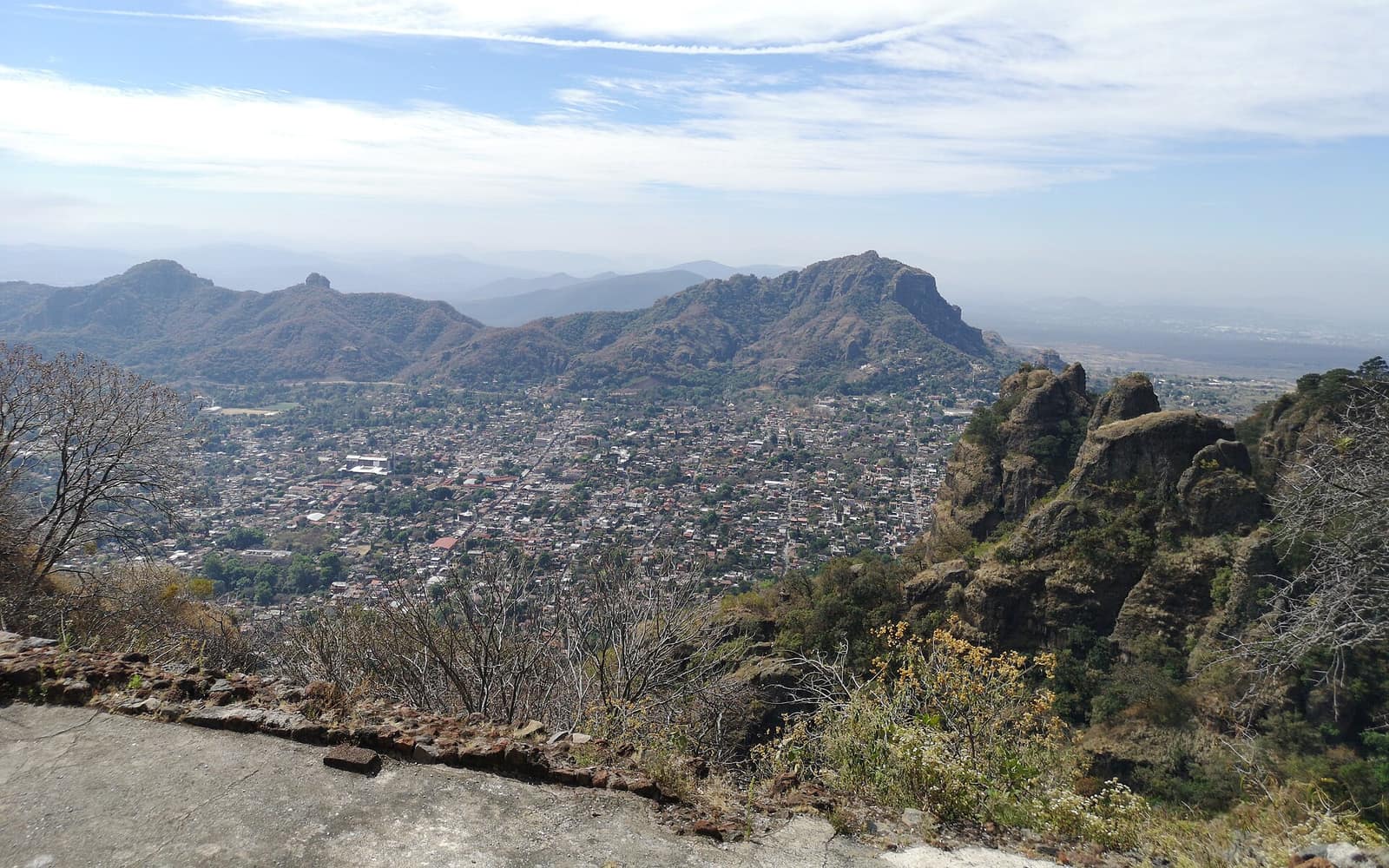
A cliff-ringed Pueblo Mágico with a mountaintop pyramid and a long reputation as an energy centre.
Pueblo Mágico · INAH pyramid
A wall of eroded volcanic cliffs curls around Tepoztlán, and on the highest ridge above the town sits a small stone pyramid raised to Tepoztécatl, the Aztec god who supposedly invented pulque. The place is genuinely old, verifiably so, and it now carries a second reputation as a New Age energy centre. That is a claim the valley wears comfortably, whether or not you buy a word of it.
The story
Tepoztlán lies in a narrow valley in Morelos, ringed by the eroded cliffs of the Sierra del Tepozteco, about 80 km south of Mexico City. Nahua peoples farmed this valley long before it had a name in any European language, and by the fifteenth century the town mattered enough for the Aztec Triple Alliance to conquer it, around 1452. The Nahuatl name is usually read as 'place of copper' or 'place of the broken rocks,' though the exact sense is debated.
After the fall of the Aztec empire, Dominican friars raised the Ex-Convento de la Natividad here between roughly 1555 and 1580, a fortress-like church and cloister with an open chapel where newly converted locals gathered outdoors. In 1994 it was inscribed by UNESCO as one of fourteen early monasteries on the slopes of Popocatépetl, recognized as a model for how the mendicant orders evangelized the region.
The climb to El Tepozteco
The pyramid is not in town. It sits on a ridge at about 2,310 m, roughly 600 m above the streets, reached by a single stone staircase that gains some 400 m over about two kilometres. It looks short on a map and feels brutal in the legs: steep, uneven, often wet, with little shade and no water on the way up. Fit hikers manage it in forty-five minutes to an hour, and locals jog it barefoot while visitors in sandals quietly regret their choices.
The temple at the top is modest, a platform a few metres high crowned by the remains of a two-room shrine. Its exact age is argued over. Carved stones bear the name of the emperor Ahuizotl and the calendar date 10 Rabbit, which falls on 1502, though scholars disagree whether that marks construction or a later commemoration, with other evidence pointing to building work after the 1452 conquest. Either way it is a genuine Postclassic sanctuary that once drew pilgrims from as far as present-day Guatemala.
The god of the maguey
The shrine honours Tepoztécatl, also called Ometochtli, the deity credited with inventing pulque, the milky fermented drink tapped from the maguey plant. He belonged to the Centzon Totochtin, the 'four hundred rabbits,' a whole cheerful pantheon of Aztec pulque gods tied to fertility, harvest, and drunkenness.
That old cult still echoes in the town's biggest festival, the Reto al Tepozteco, held on September 8 alongside the feast of the Virgin of the Nativity. Performers stage a play in Nahuatl, with Spanish translation, in which rival lords challenge the baptized Tepozteco, a dramatization of the collision between the old religion and the new. The version staged today was revived in 1932 and fills the square every year.
Why people come
Somewhere in the last few decades Tepoztlán picked up a second identity as one of Mexico's charged spiritual centres, an 'energy vortex' that draws healers, temazcal steam baths, yoga retreats, and seekers of every stripe. It also sits reliably near the top of any list of Mexican towns with the most reported UFO sightings, which does the mystique no harm at all.
None of that is measurable, and we report it as reputation rather than fact. What is real is the setting: a small town under enormous cliffs, a genuinely ancient temple on the skyline, and a steady traffic of people who arrive convinced the place will do something to them. Whether the valley truly hums or simply looks like it should, it has become very good at meeting that expectation.
Standing there today
Down in town the two reputations sit side by side without much friction. The weekend market spills crystals and copal next to stalls of tamales and tepoznieves, the local ice cream flavoured with everything from rose petals to mezcal. Cafes, boutique hotels, and mezcalerías have moved in, and on Saturdays the narrow streets clog with day-trippers up from Mexico City.
Climb above all of it to the pyramid and the pitch changes. You are winded, the town shrinks to a toy below, the cliffs go straight up around you, and coatis beg for snacks near the ruin. Whatever you make of the energy talk, standing on that ledge in front of a five-hundred-year-old shrine to a rabbit god of drink is a strange and genuinely good place to catch your breath.
Did you know
- Tepoztécatl was one of the Centzon Totochtin, the 'four hundred rabbits,' a whole Aztec pantheon of pulque gods associated with drunkenness.
- In its heyday the little mountaintop shrine pulled pilgrims from as far away as present-day Guatemala.
- Locals run the steep stone staircase barefoot while tourists sweat up it in flip-flops and, occasionally, high heels.
- Tepoztlán lost its Pueblo Mágico title in 2009 for slipping standards, then won it back in 2010.
- The town is regularly named one of Mexico's busiest UFO-sighting hotspots, which only feeds its New Age vibe.
- The Reto al Tepozteco festival opens the night before with a candlelit vigil kept over the actors' costumes.
- Tepoznieves, the town's sorbet, comes in dozens of flavours from rose petal to mezcal to corn.
Through time
- c. 1150 to 1350 CE Nahua builders raise a temple to Tepoztécatl on the ridge above the valley
- c. 1452 CE The Aztec Triple Alliance conquers Tepoztlan
- 1502 CE Stones carved with emperor Ahuizotl's name and the date 10 Rabbit
- c. 1555 to 1580 Dominican friars build the Ex-Convento de la Natividad
- 1932 The Reto al Tepozteco play is revived in the town square
- 1994 The ex-convento is inscribed as a UNESCO World Heritage Site
- 2002 Tepoztlán is named a Pueblo Mágico
Before you go
Tepoztlán sits about 80 km south of Mexico City, roughly an hour and a quarter by car or by direct bus from the Taxqueña terminal. It is an easy day trip from the capital or from nearby Cuernavaca.
Weekday mornings are calmest, while weekends fill with day-trippers; the huge Reto al Tepozteco festival lands on September 8. Start the pyramid hike early to beat both the heat and the crowds.
A relaxed day covers the market, the ex-convento, and a few tepoznieves. Add two to three hours for El Tepozteco, since the steep climb up and back is genuinely demanding.
Carry water and wear real shoes for the slick stone steps, pay the small INAH entry fee at the top, and treat the shrine and any ritual offerings you pass with respect.
Sources: Wikipedia: Tepoztlán · Wikipedia: El Tepozteco · UNESCO World Heritage Centre, list 702 · Mexico News Daily: Tepoztlán spiritual centre · Magical Towns: Reto al Tepozteco · Modern Hiker: Tepozteco Pyramid
Nearby & related
The vast city of pyramids the Aztecs later called “the place where the gods were created.”
Ancient · State of México Basílica de GuadalupeThe most visited Catholic shrine in the Americas, on a hill that was sacred long before it.
Sanctuaries · Mexico City CholulaThe largest pyramid ever built by volume, now a grass-covered hill topped by a colonial church, with pilgrims still climbing to the summit.
Ancient · Puebla Templo MayorThe great twin temple at the heart of the Aztec capital, buried under Mexico City for centuries and brought back to light in 1978.
Ancient · Mexico City Popocatépetl & IztaccíhuatlTwo great volcanoes east of Mexico City, one smoking and alive, the other still as a sleeping woman, honoured by the Nahua as living beings.
Nature · State of MéxicoHold ceremony in Mexico?
Each vertical opens with a curation round: verified, or not listed. Tell us who you are, what you hold, and where we can check you.
For practitioners →