Nature · Yucatán · Maya, with central Mexican (Toltec) influence · Maya ritual cave; offerings mainly Terminal Classic, around 800 to 1000 CE
Grutas de Balankanché
A sacred Maya cave near Chichén Itzá where an untouched chamber of rain-god censers surrounds a stone column shaped like the world tree.
Federal archaeological site managed by INAH
Deep under the Yucatán plain, past walls the ancient Maya built to seal it, a chamber of clay censers still circles a stone column shaped like the world tree. It sat untouched for roughly a thousand years until a local guide slipped behind the wall in 1959. Balankanché reads less as a ruin than as a shrine that was quietly handed back to its guardians.
The story
For centuries the outer galleries of Balankanché were known and visited. Then on 15 September 1959 a local guide, José Humberto Gómez, noticed that part of a wall looked man-made. Behind it lay stone-and-stucco barriers the ancient Maya had built to seal the deepest passages.
Beyond the walls he found chambers left almost exactly as their makers had arranged them, roughly a thousand years earlier. Ceramic censers, grinding stones, jars and small tools still stood in place. The archaeologist E. Wyllys Andrews IV led the study, and Mexico's INAH took charge of the site.
What you are looking at
The heart of the cave is a single great column where a stalactite and a stalagmite have fused over ages into a form the Maya read as a ceiba, the sacred world tree that joins sky, earth and underworld.
Around its base sit dozens of incense burners, often called god pots. Many carry the face of a goggle-eyed rain god, a form that links the Maya Chaac with the central Mexican Tláloc. In all, the cave held around two hundred censers along with manos, metates and other offerings.
Why it is sacred
To the Maya, caves are openings into the watery underworld and the home of the powers that bring rain. Balankanché lies in a dry limestone plain where water hides below ground, which made a cave with pools a natural place to petition Chaac.
The offerings gathered here speak of rain-calling ceremonies repeated over generations. According to the tradition carried by nearby communities, the cave stayed a living shrine long after the surrounding city faded.
The reburial rite
When the sealed chambers were opened, Maya h-men, the ritual specialists of nearby villages, were asked to lead a ceremony first. Beginning in October 1959, they held a long rite, remembered as a message to the lords of the place, to ask leave of the deities before outsiders studied the offerings.
The ceremony is said to have run for several days and nights. It is one reason Balankanché is described not as a ruin but as a shrine that was, in a sense, returned to its guardians.
Standing there today
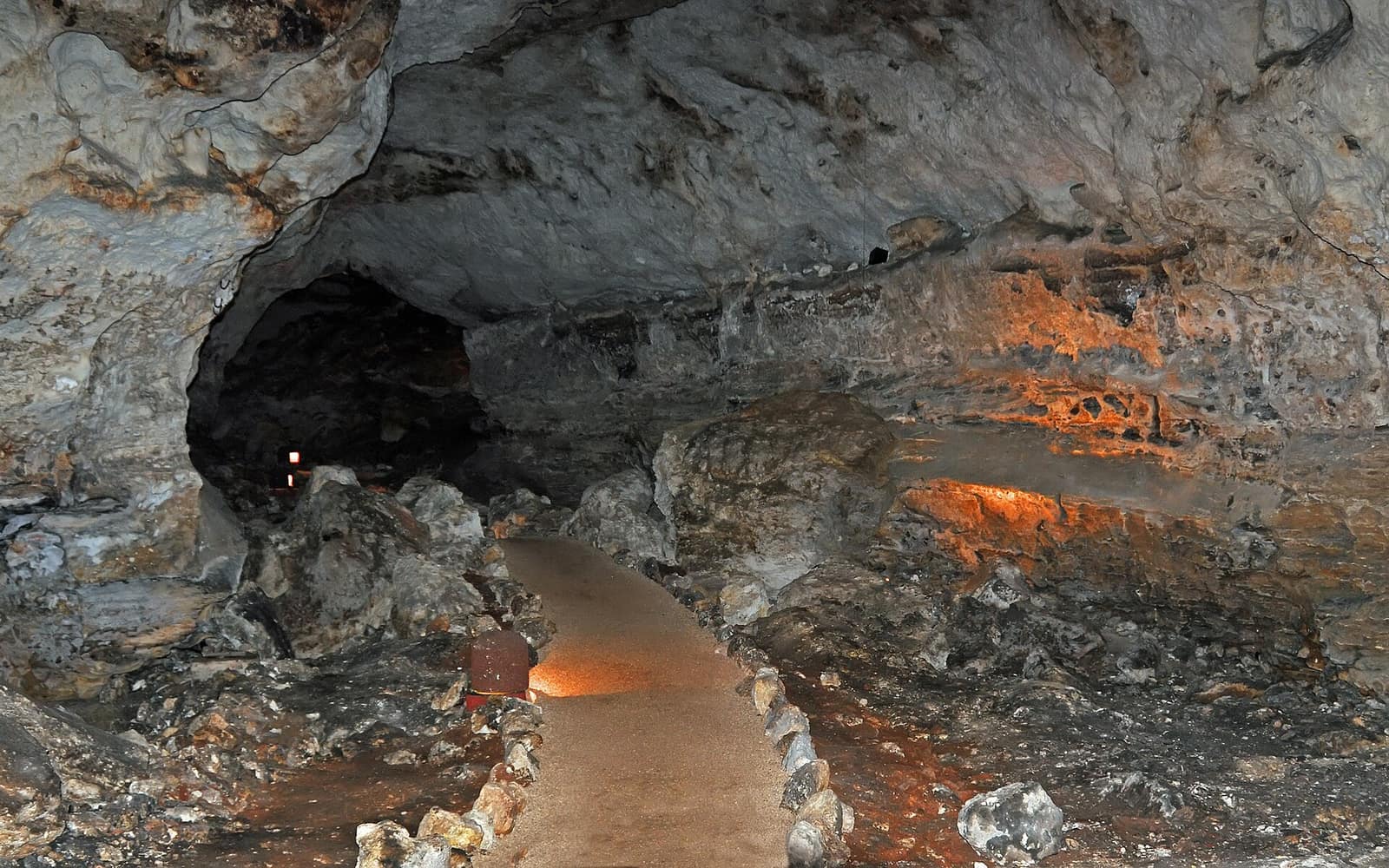
Visits are by guided tour along a lit path that ends near the great column. The air deep inside is hot and heavy, and some stretches are low, so the walk is short but not for everyone.
A recorded sound and light narration tells the cave's story in the dark. The offerings remain in place, close enough to see but held behind the ritual respect the site still carries.
Did you know
- The name Balankanché is usually translated as the hidden throne, or throne of the jaguar priest.
- The sealed offering chambers had sat untouched for roughly a thousand years before 1959.
- Before archaeologists could study the finds, Maya h-men held a rite lasting several days to ask the cave's deities for permission.
- Many of the censers show a goggle-eyed rain god, a face that ties the Maya Chaac to the central Mexican Tláloc.
- Explorers Edward Thompson and Alfred Tozzer had already visited the outer cave in 1905, long before the hidden chambers came to light.
- E. Wyllys Andrews IV titled his 1970 report on the site Balankanche, Throne of the Tiger Priest.
Through time
- c. 800 to 1000 CE Maya set censers and offerings around the ceiba column
- 1905 Edward Thompson and Alfred Tozzer explore the outer cave
- 15 Sept 1959 José Humberto Gómez finds the sealed offering chamber
- Oct 1959 Maya h-men lead a multi-day rite before excavation begins
- 1959 to 1960 E. Wyllys Andrews IV and INAH document the offerings
- 1970 Andrews publishes Throne of the Tiger Priest
Before you go
The cave is about 6 km east of Chichén Itzá on Highway 180 toward Valladolid, in the municipality of Tinum. Most visitors come by taxi or colectivo from Pisté, or add it to a Chichén Itzá day.
Come in the morning, for the first tours and slightly cooler air; the dry season from November to April is most comfortable.
The guided walk runs about 30 to 45 minutes; allow an hour if you stay for the sound and light narration.
This is a working shrine, not just a ruin. Stay with the guide, keep to the path, and do not touch the column or the offerings. Ask before photographing.
Sources: Wikipedia, Balankanche · INAH, Zona Arqueológica de Balamcanché · Show Caves of Mexico, Gruta de Balankanché · Ancient Origins, Balankanché Cave
Nearby & related
The Maya city whose pyramid still catches the equinox serpent of light on its steps.
Ancient · Yucatán Hierve el AguaPetrified “waterfalls” of mineral springs, a Zapotec bathing and ritual site for millennia.
Nature · Oaxaca TulumA walled Maya port on a limestone cliff above the Caribbean, and one of the last Maya cities still lived in when Spanish ships first passed by.
Ancient · Quintana Roo UxmalA Late Classic Maya capital in the dry Puuc hills, its limestone palaces covered in masks of the rain god Chaac.
Ancient · Yucatán CalakmulA vast Maya capital hidden in the Campeche jungle, once the seat of the Snake Kingdom that fought Tikal for control of the lowlands.
Ancient · CampecheHold ceremony in Mexico?
Each vertical opens with a curation round: verified, or not listed. Tell us who you are, what you hold, and where we can check you.
For practitioners →